Septic Tank Pumping for Homeowners
Request an estimate today
A septic tank holds solids and lets liquid flow out to the drainfield. Over time the solids pile up. Pumping clears them out so the system can keep working. Taskstour Septic is a referral service that links homeowners in the Taunton area with independent providers who do this work.
Cost and timing both matter. Frozen ground, snowmelt and storms can change when a visit makes sense and what it costs. A routine pump is usually far cheaper than a backup or a damaged drainfield. Request an estimate, compare written quotes, and ask each provider what is included. There is no obligation to book.
Tank Full or Overdue? Start Here
Gurgling drains, slow sinks or a sour smell in the yard can mean the tank is full. Sewage in a basement drain is more urgent. Take a breath. A few calm steps in the first hour can limit the mess and the bill.
The First Hour, Step by Step
- Stop running water. Skip laundry, the dishwasher and long showers.
- Do not flush anything else.
- Keep kids and pets away from wet or smelly ground.
- Leave the tank lid closed. Gas inside the tank can be harmful.
- Write down when it started and which drains act up.
- If sewage is backing up, ask providers about emergency septic cleaning when you request an estimate.
Why Pumping Costs Less Than Waiting
Solids settle at the bottom of the tank. When they build up too high, they can slip out toward the drainfield. That soil clogs and stops absorbing water. Drainfield repair can cost many times what a routine pump does. Think of pumping as the small bill that helps you avoid the big one.
How Often Should You Pump?
Many households pump every three to five years. Your number may differ. A bigger tank stretches the gap. More people in the house, a garbage disposal, or heavy laundry shortens it. Check your records, then ask a provider to measure the sludge layer and suggest a schedule that fits your home.
Plan Around the Season
The calendar changes this job more than most people expect. Know the range for your area, then pick the time that makes sense.
Winter: Frost and Snow Cover
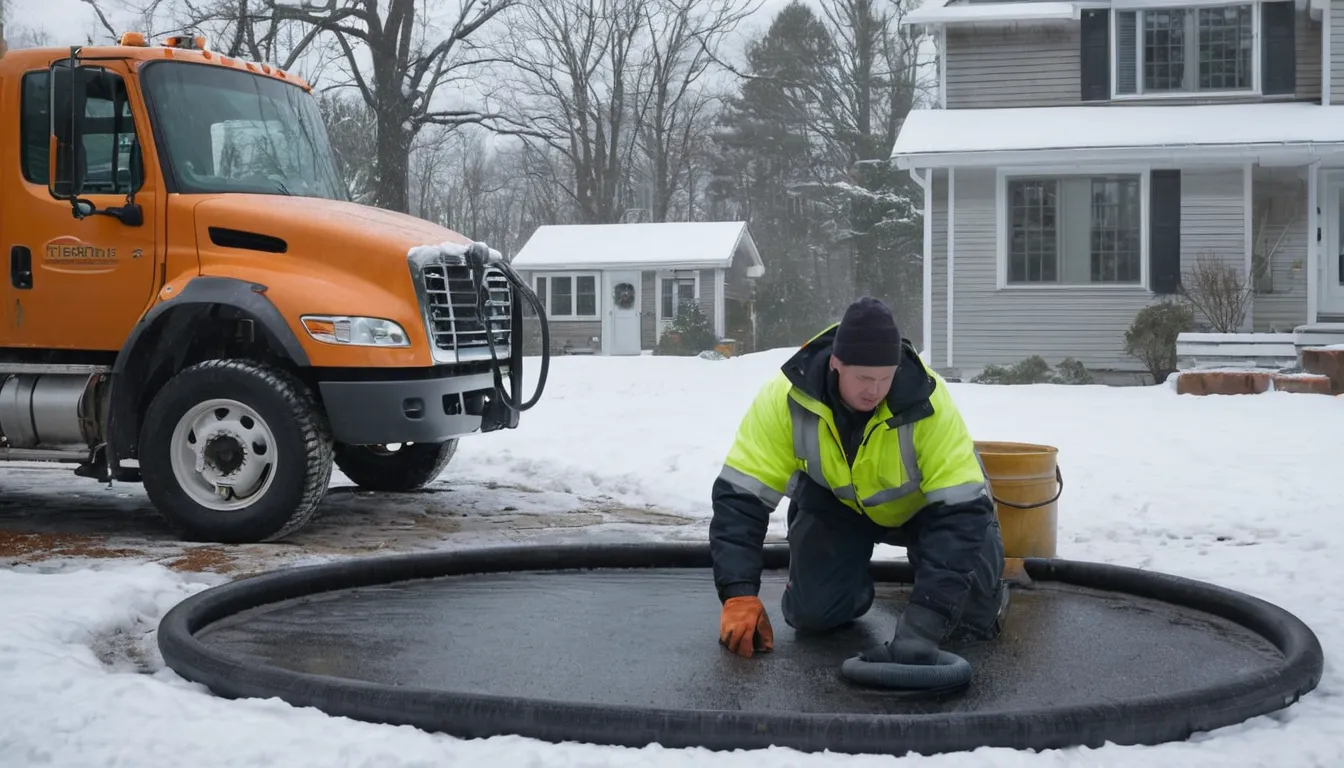
Deep frost can harden the soil over the lid. Snow can hide it. A provider may need extra time to dig, and that can add to the quote. If your tank is due, booking in fall often avoids that trouble.
Spring Snowmelt and Storm Season
Melting snow and coastal storms soak the ground. A saturated drainfield cannot take more water, so a full tank has nowhere to send it. Pumping before the thaw gives the system more room. Busy weeks can also mean longer waits, so plan early.
What Happens During a Pumping Visit
The provider finds and uncovers the lid, then opens the tank. A hose pulls out the liquid and the sludge. Many providers scrape the walls and rinse the baffles so solids do not cling. They look at the inlet and outlet pipes and the tank condition. Ask for notes on anything that looks worn or cracked.
Older Homes and Tight Yards
Older houses, stone or block foundations and Cape Cod style layouts often come with older tanks. Lids may be buried, the records may be lost, and the tank may be smaller than today's homes need. A provider may use a probe to find it. Multi-family homes can fill a tank faster, so the schedule may be shorter.
Pumping and Inspections
A pump visit is a good moment to look the system over. Ask whether the quote includes a basic check of the tank and filter. A deeper inspection of the drainfield may cost extra. Keep the paperwork. It helps if you ever need to show what was done.
Buying or Selling a Home
Many lenders and towns ask for a septic check when a house changes hands. Pumping first lets the inspector see the tank clearly. Buyers can ask for the pumping record. Sellers can save stress by having one on hand.
If You Also Have a Private Well
Some homes with a septic tank also use a private well. Ask whether the provider offers water well service or can point you to someone who does. If sewage has backed up or flooded the yard, have the well water tested before you drink it.
Caring for Your System Between Pumpings
- Spread laundry across the week.
- Flush only toilet paper and waste.
- Keep grease, wipes and coffee grounds out of drains.
- Do not park or drive over the tank or drainfield.
- Fix dripping faucets and running toilets.
Request a callback to check provider availability if your tank is near its due date and you want to plan the visit.
Questions to Ask the Provider
- What is the total price, and what does it include?
- Is there an added charge for digging or for a large tank?
- Will you check the baffles and filter?
- Can I get the quote in writing?
- What season-related delays should I expect?
Compare Written Quotes
Two quotes can look close and still cover different work. One may include the dig and the inspection. Another may not. Put the quotes side by side, line by line. Pick the one that is clear, fair and fits your timing.
What's Included
Tank Pumping
A provider removes liquid and sludge from the tank so solids stay out of the drainfield.
Lid Location
Providers can find and uncover a buried lid, which matters most in frozen ground.
Basic Condition Check
Many visits include a look at baffles, pipes and the filter, with notes for you.
Urgent Cleanout
For backups, ask about emergency septic cleaning and what it adds to the written quote.
Know the Range Before You Book
Septic tank pumping prices in the U.S. vary by tank size, access, season and region. These are typical ranges, not quotes. Ask each provider for a written quote that lists every charge.
| Item | Typical range | Notes |
|---|---|---|
| Routine pumping, standard tank | $300 – $600 | Common for tanks around 1,000 to 1,500 gallons. |
| Large tank pumping | $500 – $1,000 | More gallons and more time on site. |
| Urgent backup cleanout | $400 – $1,000 | Rush work and extra cleanup can raise the price. |
| Digging to uncover a lid | $100 – $400 | Frozen or snowy ground can push this higher. |
| Riser and lid installation | $300 – $900 | Makes later pumping easier and cheaper to reach. |
| Filter cleaning or replacement | $50 – $200 | Often done during the visit if the tank has one. |
How It Works
Spot the Signs
Note slow drains, odors or soggy ground. Cut back water use and keep the lid closed until help arrives.
Request an Estimate
Tell us your tank size, if known, and what you are seeing at home.
Compare Written Quotes
Check what each quote includes, such as digging, inspection and disposal, and compare them line by line.
Schedule the Pumping
Pick a time that suits the weather and ground. Keep the service record for your files.
Why Call Taskstour Septic
Fair Pricing
Side-by-side written quotes show what drives the price, so you can compare real numbers instead of guessing.
Season Smart
Timing around frost, snowmelt and storms can ease access problems and avoid busy weeks.
Local Providers
Independent providers know the soil, the older homes and the weather in your area.
No Obligation
Request an estimate, read the details, and decide when you are ready.
Other Services
Need septic tank pumping in Taunton?
Send a short request for a written estimate, or Request a callback to check provider availability. No obligation to hire.
No obligationSeptic Tank Pumping FAQ
How often should a septic tank be pumped?
Many homes pump every three to five years. Tank size, household size and garbage disposal use change that. A provider can measure the sludge layer and suggest a schedule for your home.
How much does septic tank pumping cost?
In the U.S., routine pumping often runs about $300 to $600. Large tanks, digging, frozen ground or a backup can raise it. Get a written quote before the work starts.
Can a septic tank be pumped in winter?
Often yes, but frost and snow can make the lid hard to reach and add to the price. Pumping in fall can avoid that.
Reach a local provider
Send a short request for a written estimate, or Request a callback to check provider availability. No obligation to hire.
No obligation